My dissertation is comprised of three components: developing a genus-wide phylogeny based on HybSeq or Target-Capture data, characterizing population-level variation in a species complex through RAD-Seq data, and incorporating morphometric data based on herbarium specimen measurements. All three incorporate observations generated through extensive fieldwork which provides ecological context to these quantitative analyses. While genetic analyses are the primary framework used to understand these systems, witnessing how populations do or do not interact remains vital to discerning what drives variation within and among species.
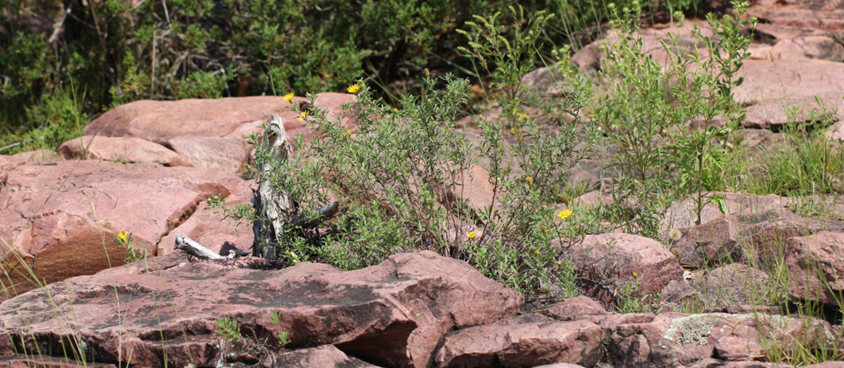
Chapter one aims to reconstruct the evolutionary history of Heterotheca and its relatives in the subtribe Chrysopsidinae (including genera such as Chrysopsis and Pityopsis). Beyond characterizing the phylogenetic relationships within Heterotheca, this genus-wide phylogeny allows for generating time-calibrations and subsequently mapping character evolution (morphological, ecological, etc.). The primary challenge beyond sample collection – either directly through field work or through herbarium specimens – is detecting and sorting paralogs for the 1000+ genes utilized through the Comp1061 (Conserved Ortholog Set) target-capture bait set. Extensive testing across processing steps highlights the need to thoroughly investigate sources of variation and determine how best to filter “noise” out.
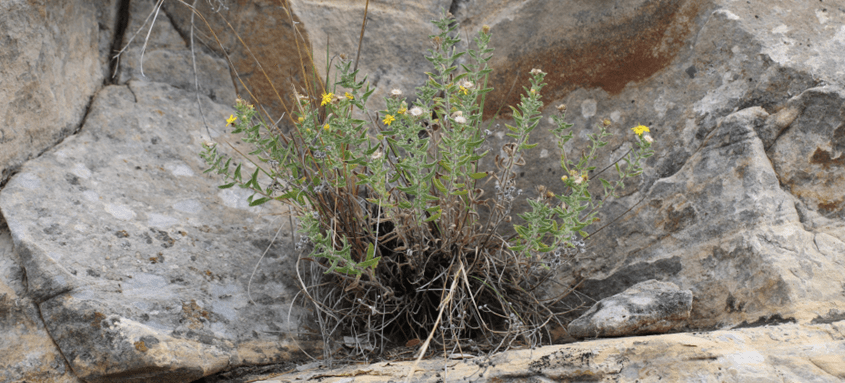
Chapter two delves into the population genetics of one polyploid species complex within the Great Plains (including H. angustifolia, H. canescens, H. hirsutissima, H. scabrifolia, H. stenophylla, and H. villosa s.s.) of the central United States. Diploids, triploids, and tetraploids are involved in this species complex, but the specific interactions across species and ploidy levels are unclear. Diploids were presumed not to introgress with other taxa while tetraploids have been hypothesized to hybridize frequently. If true, this “pillar complex” would explain the regional distribution of intermediate phenotypes in only certain areas. However, a “triploid bridge” hypothesis could alternatively explain the continued existence of polyploids in regions predominantly comprised of diploids. Whether the polyploids are the result of autopolyploidy (possibly derived from extinct diploids), allopolyploidy, or a mixture of both remains to be seen.
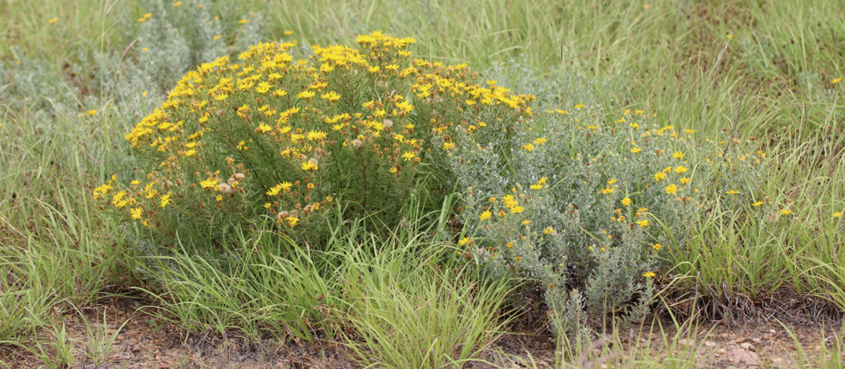
Chapter three bolsters the population genetic data with morphometric data for the Great Plains populations. Infraspecific variation is considerable within species, and edaphic differences may contribute to locally adaptive traits on various substrates (ex. gypsum vs. granite). Describing consistent features enables more accurate species identification in highly variable taxa, especially in actively hybridizing systems. Phenotypic data can further help verify whether genetically-confirmed hybrids exhibit intermediate features and if polyploids have undergone distinctive morphological adaptations to what may represent divergent niches. Additionally, this chapter aims to uncover consistent morphological features to make identifying species eaiser in groups with notoriously subtle or cryptic interspecific differences.

